Independence, Missouri / A taxpayer’s dissent
Honor the history. Question the spending.
A $19.9 million bond. A record of deferred maintenance. A public right to ask hard questions.
I bought this domain because I was blocked.
I will not be silenced.
When I protested the tax, both mansions blocked me from their social media. That is my account of what happened. I bought BinghamWaggoner.com and VaileMansion.com because I will not let a block button end my objection to public spending.
These are publicly owned historic properties with government partners. I have a First Amendment right to object to the tax. I believe excluding critics from a government-operated public discussion because of their viewpoint is unacceptable. If these accounts exercise government authority, their moderation must respect constitutional limits.
The legal question turns on the actual authority and use of each account. A partnership alone does not decide it. In Lindke v. Freed, the Supreme Court required authority to speak for government and a purported exercise of that authority. I want the City to disclose who operates these accounts, under what authority, and with what moderation policy. Read the Supreme Court’s opinion.
In my judgment, these plain .com names are easier to remember than BWestate.net and a stronger choice than leaving VaileMansion.com available. Management overlooked them; I bought them for independent criticism. The four links below let readers compare our arguments with the organizations’ own accounts. They do not imply a partnership or endorsement.
Four buildings and a log courthouse.
Nearly $20 million.
Show your work.
I opposed this tax. I still consider it a dubious response to a failure of stewardship. Loving history does not require endorsing every spending plan presented in its name.
The City says voters approved up to $19.9 million in general obligation bonds on November 3, 2026. The priority sites are Bingham-Waggoner Estate, Vaile Mansion, Truman Memorial Building, Old Fire Station One, and the 1827 Log Courthouse—the small log building I called a cabin in my speech. Read the City’s approval announcement.
That is four principal buildings and a log courthouse, but it is not necessarily only five structures: the authorized scope also includes facilities and grounds, and the estates have outbuildings. A serious critique must count those honestly. It must also ask whether every proposed improvement belongs in a preservation budget.
To me, $20 million sounds more like rebuilding money than the cost of keeping these places standing. That is my judgment about the scale, not a contractor’s estimate. If the City believes the price is justified, publish the measured quantities, competing bids, alternatives, and condition reports that demonstrate it.
“Save our history” is a slogan. It is not a scope of work. What precisely is about to be saved, replaced, added, upgraded, landscaped, designed, administered, or financed? Those are different purchases. They require different explanations.
The number is not the explanation.
The City’s FAQ describes an estimated $15.6 million in projects, plus contingency and issuance costs within the bond authorization. Repayment is through property taxes over as many as twenty years. Interest and the timing of bond sales matter; the authorization is not the final lifetime repayment bill. Read the financing FAQ.
| Published figure | What it means |
|---|---|
| $19.9 million | Maximum bond principal authorized; not proof all bonds have been issued or spent. |
| $15.6 million | The City FAQ’s estimated underlying project costs. |
| 25% contingency | The FAQ’s stated contingency provision; disclose its calculation and each authorized use. |
| Up to 20 years | Property-tax-supported repayment period described by the City. |
My written speech used $20 million divided by roughly 50,000 households: about $400 per household before interest. That is an illustration of scale, not an equal household assessment or a tax bill. Property taxes depend on assessed values, property classifications, timing, and financing. The City’s illustrative annual residential estimate is $35.43 for a $200,000 property, with a higher first year possible. Renters and customers can also bear costs when property owners pass expenses along, although the amount of any pass-through varies.
Earlier proposed allocations and later tentative figures differ. The Historical Society’s October account and KSHB’s post-election reporting of tentative allocations describe different estimates. That calls for a dated reconciliation, not a claim that one old estimate is a final contract. Publish a version history for the budget and explain every change. A contingency is a reserve, not permission to spend without an account.
The bond is for capital work, not routine salaries and supplies. The City also promises a twenty-year business plan. A plan has value only if it identifies future maintenance obligations, assigns responsibility, and shows how they will be funded after the campaign is over.
Who let preservation become an emergency?
The City’s own July 2026 resolution acknowledges significant deferred maintenance and insufficient General Fund resources. These are City-owned properties. The City intended to retain the mansions while exploring preservation and management options. Read the City’s ownership and maintenance statement.
I call a backlog of this scale government mismanagement. That is my assessment of public stewardship. It does not establish that every volunteer, employee, or current official caused every defect. It does mean the public owner must explain the inspections, warnings, maintenance budgets, deferrals, and decisions that brought us here.
Taxpayers struggling to repair their own roofs should not be guilted into treating every municipal request as a test of their love for history. Keeping rain out, maintaining drainage, and repairing historic materials are recurring responsibilities. If earlier public spending did not meet those responsibilities, disclose why.
Winning a bond vote does not erase that history. Before another round of deterioration becomes another tax campaign, publish an annual maintenance schedule, an identified responsible officer, and measurable standards for each property.
Preservation is not renovation.
Renovation is not restoration.
My objection is to treating those words as interchangeable. The National Park Service identifies four treatments, each with a different purpose. Read the NPS treatment framework.
- Preservation
- Retain historic fabric and character through protection, maintenance, stabilization, and repair.
- Rehabilitation
- Allow a compatible use through repairs and appropriate alterations while retaining significant historic features.
- Restoration
- Represent a particular period in a property’s history, using evidence to guide what is retained, removed, or recovered.
- Reconstruction
- Re-create a vanished historic resource.
“Renovation” is not one of those four formal treatment categories. A makeover is not automatically a restoration because its brochure contains the word “historic.” Each project should name its treatment, the evidence supporting it, and the original material that will survive.
Timely preservation can prevent expensive replacement. That is the economic argument for maintaining the roofs, windows, masonry, and drainage before they fail. It is not a universal claim that every preservation job costs less than every renovation: condition, specialist labor, safety requirements, accessibility, and scope affect the price. The City must price the alternatives rather than rely on labels.
I favor a practical order: stabilize immediate threats, stop water, repair before replacing, protect significant fabric, and phase discretionary improvements. NPS preservation guidance emphasizes maintenance and repair and limits extensive replacement. Read the preservation standards.
An emotional campaign is not an audit.
I find the scale of the request, the fervor of the campaign, the fancy giveaway books I describe, and the anger directed at objections deeply troubling. They make me suspicious. They do not answer a single question about a roof, an invoice, or a contractor’s profit.
Let me be precise: campaign intensity, glossy books, and hostility to critics do not establish that anyone is pocketing public money. I have not established theft, fraud, or a kickback. My demand is for the disclosures that let residents test the spending instead of being told to trust a campaign.
The public campaign offered yard signs, endorsements, and tax estimates. Those are political advocacy, not independent verification of construction costs. Read the campaign’s own presentation.
- Publish the full estimates. Quantities, unit costs, professional fees, contingencies, alternatives, and the assumptions behind each.
- Identify who benefits. Contractors, subcontractors, owners, consultants, and disclosed conflicts of interest.
- Open the procurement record. Bid notices, proposals, evaluation criteria, awards, and reasons for exceptions.
- Track the changes. Every change order, contingency draw, invoice, payment, and authorized signature.
- Account for promotion. Who paid for campaign books, printing, distribution, events, and advertising? Separate private campaign money from public funds.
- Require independent review. Compare completed work and preserved historic fabric against what taxpayers actually purchased.
These are demands for safeguards against waste, fraud, and corruption. They are not a finding that a particular person committed a crime. The larger the public bill, the less acceptable secrecy becomes.
Preserve the estate. Keep its history honest.
The Bingham-Waggoner record
A house associated with dissent should withstand scrutiny.
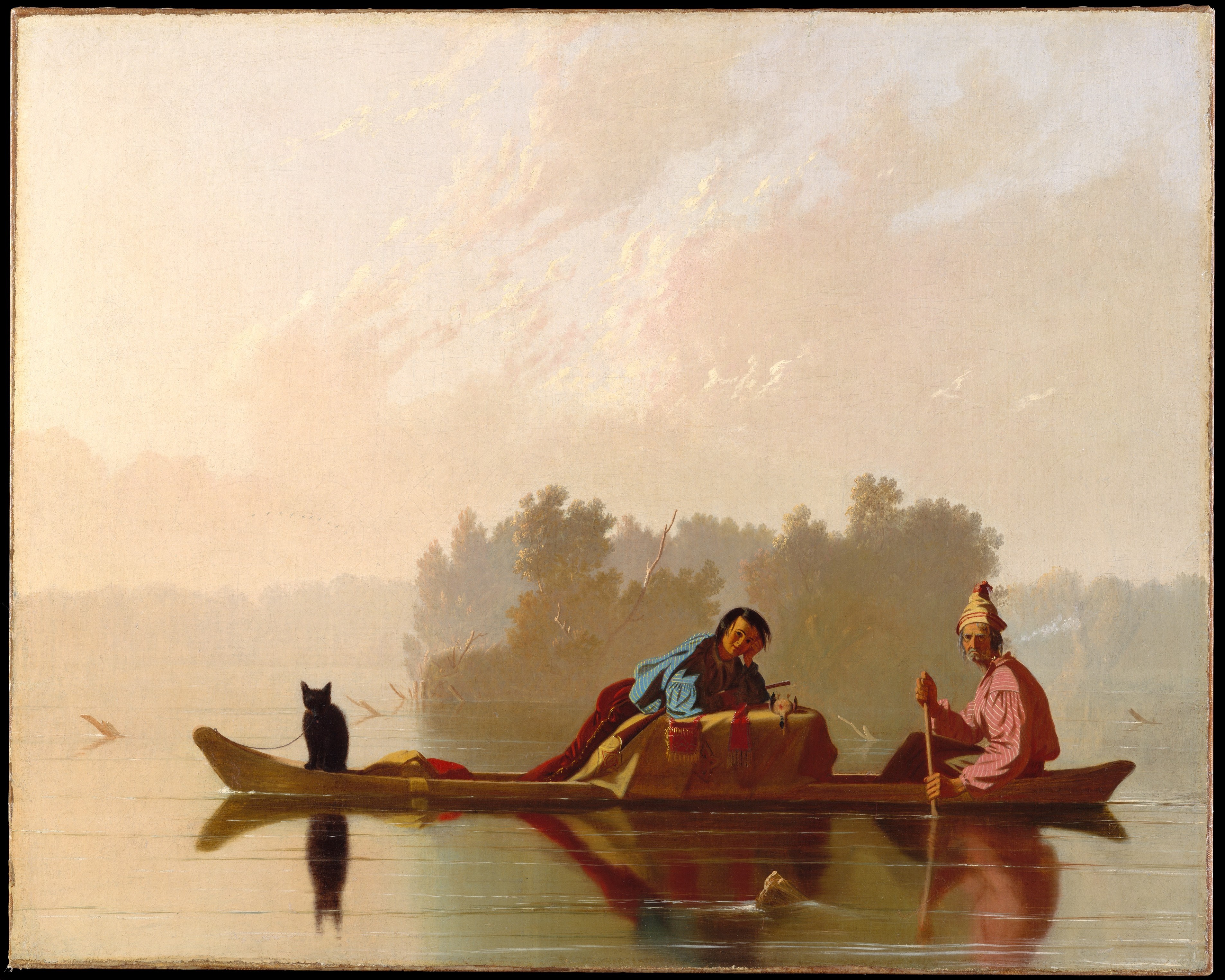
George Caleb Bingham challenged government through art. His association with this property makes an independent critic's demand for answers especially fitting. Respect for the estate should include respect for residents who question the bill.
The estate describes a 26-room mansion on more than 19 acres, with a history connected to Bingham, the Waggoner family, and the western trails. Its account places Bingham's studio here and connects it with his response to General Order No. 11. The site includes grounds and other structures, so honest budgeting must identify the work on each. Estate overview · Estate history
The maintenance record deserves daylight.
The City's April 2024 tourism report recorded work toward replacing the stable roof and repairs to rotted soffits and fascia at Bingham-Waggoner. Those entries document maintenance work, not an absence of work. They also invite an obvious question: how did those projects fit into the larger condition assessment and long-term repair plan? Read the City report, historic-sites section.
Publish the inspection reports, work orders, bids, completion dates, warranties, and follow-up findings. Show whether the repairs solved the underlying problems. Explain which conditions remained, what caused them, and why they were not addressed sooner. A photographed ribbon cutting cannot answer those questions; records can.
The City and private citizens acquired the estate together in 1979. Decades of public ownership call for an account of decades of stewardship. The City acknowledged significant deferred maintenance in its July 2026 discussion of these historic properties. Residents deserve to know which failures of planning, funding, or execution created today's backlog. City acknowledgment.
My connection reaches back decades.
Decades ago, Bingham-Waggoner displayed my rare books in a lengthy museum exhibition. That is my recollection of a period when, in my judgment, the institution was better managed. My criticism comes with an interest in preserving and sharing history, not indifference to it. The exhibition's dates and archival documentation have not yet been independently confirmed for this site.
I want cultural institutions to make their collections meaningful and their management accountable. Those purposes reinforce each other. Asking how a public estate is maintained is part of caring about what it holds and what future visitors will experience.
Allocate first. Explain fully. Report continuously.
The five-site bond is not a single building repair. That makes transparent allocations essential. For this estate, separate the mansion, stable, carriage house, grounds, collections-related work, professional services, and contingency. State what work is preservation, what changes a building's use or appearance, and why each choice is necessary.
Put contract awards, competing bids, conflicts disclosures, invoices, and change orders where any resident can read them. Track the original budget against the final cost. Require explanations when a project expands. Public trust should rest on verifiable records, not enthusiasm for the campaign.
The City says voters approved the $19.9 million bond on November 3, 2026. My objection to its scale and the management behind it does not disappear with the vote. Oversight belongs to critics as well as supporters. City approval announcement.
Protect the estate. Open the books. Answer the critics. Public ownership carries public obligations.
The entire written speech.
The argument in my own words.
My November 2, 2026 written remarks challenged the tax, the five properties’ historical claims, the burden on ordinary residents, and the government’s record of care. The complete original is available here, including the passages for which this site supplies historical or financial context.
Read the full written speech →
Download the original speech as text · Read my original Facebook posts
Read the full written speech on this page
The complete written speech below is reproduced from my original WordPerfect document, with its wording and errors retained. It is the written version, not a transcript of everything delivered aloud. The November 3 vote happened the next day. Its $400 figure illustrates equal division of principal, not an actual household tax assessment. Its accusations and rhetorical questions are the author’s statements, not findings of an audit or court.
Historical correction: Harvey Vaile was tried in the Star Route prosecutions and ultimately acquitted. The speech’s assertion of stolen funds should not be read as an established criminal finding. Current commentary distinguishes preservation treatments and identifies the five sites and their wider grounds and outbuildings.
Remarks on Bond Question One Independence City Council, November 2, 2026
I am John Hajicek. I live on Saddle Ridge Drive. I also have homes at the end of Liberty Street and on Independence Avenue, where we are losing both liberty and independence. I am not a complainer. I have not spoken before this city council since 1998.
I am opposing the $20 million tax on the residents of Independence for several buildings. You are not “saving” history, because it is a history nobody here knows or understands.
I have a graduate education in economics, but I am arguably the best-paid American preservationist, and I have lived in Independence since 1988. So this is not a question about love for history or love for Independence or love for economic sensibilities. I have personally restored homes, and I have a specialty in historic sites and famous architectural artifacts of Smithsonian quality.
But your appeal to saving history is trickery. History does not mandate that this city tax its citizens so that it can use the money for waste, fraud, corruption, and inefficiency. History actually teaches that low taxation is better for humans.
The residents of Independence deserve to keep their earnings and fix their own houses, not give the money to the rich to fix empty houses from a bygone Gilded Age that the peasantry could only dream about in 1881 and 1899, and is only useful for dreaming about today.
$20 million divided by the 50,000 or so households in Independence is about $400 per household, before interest. And we are promised a free ticket to visit the houses, like their housekeepers and other servants and peasants. This would be paid through property taxes over as many as twenty years. Property taxes are also paid indirectly when you rent, get a haircut, go to daycare, or buy gas or groceries because those businesses have property taxes to pay through ownership or rent. All taxes and tariffs are paid by consumers.
So five buildings, $20 million.
First, the Truman Memorial Building, 1926. Truman was nothing in 1926, the building was a memorial for the WWI veterans and the we changed it to memorialize the WWII president. It is Georgian revival, when we fought the Revolutionary war as a rebellion against Georgian-revival and this taxation.
Second, Fire Station Number One, 1928, not the 1858 actual first fire station. Are we all treated like your children chasing fire trucks? That is an obsolete building from 1928, not even an antique yet, though fairly cute, more than one hundred years newer than the city. About fifteen percent of our houses are older than that fire station.
Third, Bingham-Wagonner, 1899 mansion on top of an 1852 house.
I want a tax abatement for all African American slave descendants because Bingham was a slaveholder. I think there is a great irony in now taxing African Americans a second time to pay for the 1899 mansion built on top of his 1852 house, since they already paid once for this exact same house. This is Italianate architecture? The Italians preserve their own architecture that is 6,000 years old and in this villa style that is 600 years old. It is no servant’s responsibility in a free economy.
Fourth, Vaile Mansion, 1881, on Liberty Street. In regard to Vaile, there is a similar irony in that the mansion was paid for by Harvey Vaile scamming the government on the backs of hardworking American taxpayers, and now you want to do it to us a second time for the exact same house. Vaile just appeared in Kansas City as a lawyer nobody even wanted to share an office with. His wife did not want to live in the house with him. Suddenly he scammed the government by charging $50,000 to deliver mail that fit in the leg of his boot—that as when ordinary Missouri laborers earned a dollar or two a day. He used the stolen money to buy plantations and ranches. So he went to trial in Washington and his trials are 10,000 printed pages. If anyone here wants to “save history,” they should read the history before taxing me for his paint and air conditioner. And this is “Second Empire” architecture bastarded with Italianate. An Empire on Liberty Street with a Mayor who is a King. Why must our poorest citizens struggling to buy hamburger, not Beef Wellington, pay to “save” French architecture when Paris has preserved 6,000-year-old architecture and in this style houses as old as France itself.
Fifth, the log cabin courthouse, 1827. Save it—because in Independence, “equal justice” meant the slave built the courthouse. It is the only building here that deserves government funding as it is a government building, which should be turned over to the county to take care of. The cost of the cabin when it was built was $150. How do you need $750,000 to fix a $150 log cabin? New logs? That is 5,000 times as much as it cost to build it—who is stealing the money, but the same people who employed the slave?
Independence citizens deserve equal justice, equal rights, equal protection, and equal taxation. You are going to tax the servants another $400 per household after you told the Russian billionaires, oligopolists, and oligarchs they only had to pay ten percent as much property tax as their servants?
You are the party that can raise taxes for every good thing, but we want to know what you did with the taxes we already gave to you. They were squandered. So you keep adding another tax for potholes, parks, puppies, and playgrounds, and now for buildings that you were already supposed to fix with money you already took. The taxpayers cannot be fooled into thinking that loving history requires loving tyranny and taxes and trickery.
Boring speech, boring subject, and not worth $400 each.
For Mormon history,
I recommend my own house.
I regard my own house as the better Independence, Missouri destination for Mormons interested in Mormon history and rare books. That is my personal judgment as its owner and collector. It offers a different experience from touring a Gilded Age mansion.
Visits are by appointment or invitation. For details, visit Mormon.house →.
Four companion links.
Two very different views.
Sources, testimony & open questions
City documents support the bond amount, approval, financing framework, ownership, and deferred maintenance. Organization records support house histories and published repair lists. My account of the blocks, campaign books and reactions, my past preservation work, and the rare-book exhibit is first-person testimony; the sources located here do not independently establish every detail.
Sources and recollections
A record readers can check.
This site links to the City's own statements and the historic organizations' own accounts. John Hajicek's descriptions of his experiences are presented as his account.
A public-web search on November 15, 2026 did not locate a verifiable news article connecting John Hajicek by name with either mansion or independently confirming the rare-book exhibition he recalls at Bingham-Waggoner. That search result does not establish that no such coverage exists; older newspaper archives may contain material that is not indexed online.
Source trail: approval · financing · ownership & backlog · preservation terminology · social-media law · my dated posts.
Estimates are not final contracts. The absence of a document in this site’s research is not proof that it does not exist. Corrections supported by records are welcome at Mormonism@Mormonism.com.